


Head restraint adjustment
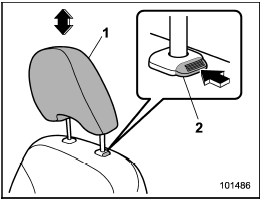
1) Head restraint
2) Release button
Both the driver’s seat and the front passenger’s seat are equipped with head restraints.
The head restraint should be adjusted so that the center of the head restraint is closest to the top of the occupant’s ears.
To raise:
Pull the head restraint up.
To lower:
Push the head restraint down while
pressing the release button on the top of
the seatback.
To remove:
While pressing the release button, pull out
the head restraint.
To install:
Install the head restraint into the holes that
are located on the top of the seatback until
the head restraint locks.

- Never drive the vehicle with the head restraints removed because they are designed to reduce the risk of serious neck injury in the event that the vehicle is struck from the rear. Therefore, when you remove the head restraints, you must reinstall all head restraints to protect vehicle occupants.
- All occupants, including the driver, should not operate a vehicle or sit in a vehicle’s seat until the head restraints are placed in their proper positions in order to minimize the risk of neck injury in the event of a crash.
See also:
Wiper and washer
WARNING
In freezing weather, do not use the windshield washer until the windshield is
sufficiently warmed by the defroster.
Otherwise the washer fluid can freeze on the windshield, blocking your v ...
Refrigerant for your climate control system
Your air conditioner uses ozone friendly refrigerant HFC134a. Therefore, the method of adding, changing or checking the refrigerant is different from the method for CFC12 (freon). Consult your SUBARU ...
To temporarily cancel the cruise control
The cruise control can be temporarily canceled in the following ways.
• Push the “CANCEL” button.
• Depress the brake pedal.
• Depress the clutch pedal (MT models only).
• Shift the select lever ...