


Fastening the seatbelt
WARNING
● Never use a belt that is twisted or reversed. In an accident, this can increase the risk or severity of injury.
● Keep the lap belt as low as possible on your hips. In a collision, this spreads the force of the lap belt over stronger hip bones instead of across the weaker abdomen.
● Seatbelts provide maximum restraint when the occupant sits well back and upright in the seat. To reduce the risk of sliding under the seatbelt in a collision, the front seatbacks should be always used in the upright position while the vehicle is running. If the front seatbacks are not used in the upright position in a collision, the risk of sliding under the lap belt and of the lap belt sliding up over the abdomen will increase, and both can result in serious internal injury or death.
● Do not put cushions or any other materials between occupants and seatbacks or seat cushions. If you do so, the risk of sliding under the lap belt and of the lap belt sliding up over the abdomen will increase, and both can result in serious internal injury or death.
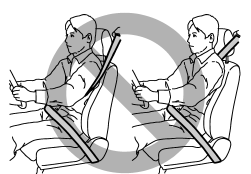
WARNING
Never place the shoulder belt under the arm or behind the back. If an accident occurs, this can increase the risk or severity of injury.
CAUTION
Metallic parts of the seatbelt can become very hot in a vehicle that has been closed up in sunny weather; they could burn an occupant. Do not touch such hot parts until they cool.
See also:
Seatbelt maintenance
To clean the seatbelts, use a mild soap and lukewarm water. Never bleach or dye
the belts because this could seriously affect their strength.
Inspect the seatbelts and attachments including the web ...
Unlocking the rear gate (Outback)
Pressing the “” button unlocks the
rear gate.
An electronic chirp will sound twice and the turn signal lights will flash twice. ...
Dome light
1. Remove the lens by prying the edge of the lens with a flat-head screwdriver.
2. Turn the bulb until the flat surfaces at its ends are aligned vertically.
3. Pull the bulb straight downward to ...