


Wear indicators
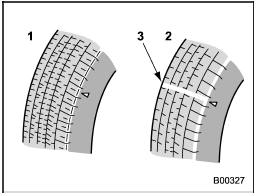
1) New tread
2) Worn tread
3) Tread wear indicator
Each tire incorporates a tread wear indicator, which becomes visible when the depth of the tread grooves decreases to 0.063 in (1.6 mm). A tire must be replaced when the tread wear indicator appears as a solid band across the tread.

When a tire’s tread wear indicator becomes visible, the tire is worn beyond the acceptable limit and must be replaced immediately. With a tire in this condition, driving at high speeds in wet weather can cause the vehicle to hydroplane.
The resulting loss of vehicle control can lead to an accident.
NOTE
For safety, inspect tire tread regularly and replace the tires before their tread wear indicators become visible.
See also:
Selecting reverse gear
CAUTION
Shift into reverse ONLY when the vehicle has completely stopped. It may cause
damage to the transmission to try shifting into reverse when the vehicle is moving.
1) Slider
You must rais ...
Head restraint adjustment
1) Head restraint
2) Release button
Both the driver’s seat and the front
passenger’s seat are equipped with head
restraints.
The head restraint should be adjusted so
that the center of the ...
FM reception
Although FM is normally static free, reception can be affected by the surrounding area, atmospheric conditions, station strength and transmitter distance. Buildings or other obstructions may cause mom ...