


Front seatbelts
1. Adjust the seat position according to the following procedure.
Driver’s seat: Adjust the seatback to the upright position. Move the seat as far from the steering wheel as practical while still maintaining full vehicle control.
Front passenger’s seat: Adjust the seatback to the upright position. Move the seat as far back as possible.
2. Sit well back in the seat.
3. Pick up the tongue plate and pull the belt out slowly. Do not let it get twisted. If the belt stops before reaching the buckle, return the belt slightly and pull it out more slowly. If the belt still cannot be unlocked, let the belt retract slightly after giving it a strong pull, then pull it out slowly again.
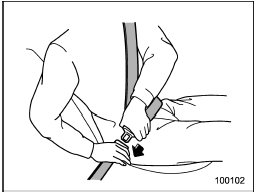
4. Insert the tongue plate into the buckle until you hear a click.
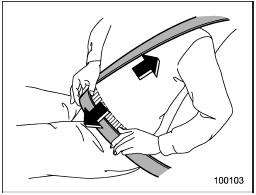
5. To make the lap part tight, pull up on the shoulder belt.
6. Place the lap belt as low as possible on your hips, not on your waist.
See also:
Adverse safety consequences of overloading on handling and stopping and on
tires
Overloading could affect vehicle
handling, stopping distance, and
vehicle and tire performance in the
following ways. This could lead to
an accident and possibly result in
severe personal in ...
Displaying and selecting preset stations (type D audio)
1. Press the button for 1.5
seconds
or longer during satellite radio reception to
display the radio screen.
2. Operate the “TUNE/TRACK/CH” dial
to select the stations. ...
Driving on grades
● Before going down a steep hill, slow down and shift into lower gear (if necessary,
use 1st gear) in order to utilize the overheating of your vehicle’s brakes. Do not
make sudden downshifts ...