


Active head restraint
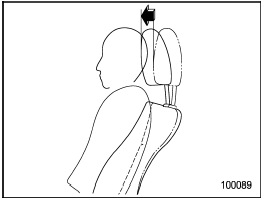
The front seats of your vehicle are equipped with active head restraints. They automatically tilt forward slightly in the event the vehicle is struck from the rear, decreasing the amount of rearward head movement and thus reducing the risk of whiplash. For maximum effectiveness, the head restraint should be adjusted so that the center of the head restraint is closest to the top of the occupant’s ears.

- Each active head restraint is effective only when its height is properly adjusted and driver/passenger sits in the correct position on the seat.
- If your vehicle is involved in a rear-end collision, have an authorized SUBARU dealer inspect the active head restraints.
- The active head restraints may not operate in the event the vehicle experiences only a slight impact in the rear.
- The active head restraints may be damaged if they are pushed hard from behind or subjected to shock. As a result, they may not function if the vehicle suffers a rear impact.
See also:
Inspection
Perform the following steps at least twice a year to check the release handle
for correct operation.
1. Open the trunk lid.
2. Use a flat-head screwdriver with a thin blade. Slide the flat-head ...
Washer
Washer
To wash the windshield, push the washer button at the end of the wiper control lever.
The washer fluid sprays until you release the washer button. The wipers operate while you push the button ...
Making a phone call from speed dial
It is possible to select a phone number from speed dial registered with the invehicle equipment to make a phone call.
Preset buttons
1. Press the preset button in which the desired number is registe ...