


Checking the fluid level
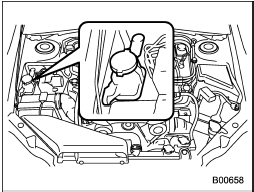
The power steering fluid expands greatly as its temperature rises; the fluid level differs according to fluid temperature.
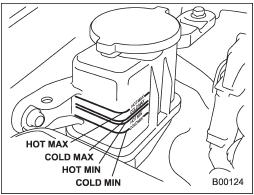
Therefore, the reservoir tank has two different checking ranges for hot and cold fluids.
Check the power steering fluid level monthly.
1. Park the vehicle on a level surface, and stop the engine.
2. Check the fluid level of the reservoir tank.
When the fluid is hot after the vehicle has been run: Check that the oil level is between “HOT MIN” and “HOT MAX” on the surface of the reservoir tank.
When the fluid is cool before the vehicle is run: Check that the oil level is between “COLD MIN” and “COLD MAX” on the surface of the reservoir tank.
3. If the fluid level is lower than the applicable “MIN” line, add the recommended fluid as necessary to bring the level between the “MIN” and “MAX” line.
If the fluid level is extremely low, it may indicate possible leakage. Consult your SUBARU dealer for an inspection.

Be careful not to burn yourself because the fluid may be hot.

• When power steering fluid is being added, use only clean fluid, and be careful not to allow any dirt into the tank. And never use different brands together.
• Be careful not to spill power steering fluid when adding it. If power steering fluid touches the exhaust pipe, it may cause a bad smell, smoke, and/or a fire. If power steering fluid gets on the exhaust pipe, be sure to wipe it off.
See also:
Braking when a tire is punctured
Do not depress the brake pedal suddenly
when a tire is punctured. This could cause
a loss of control of the vehicle. Keep
driving straight ahead while gradually
reducing speed. Then slowly pul ...
Washing the underbody
Chemicals, salts and gravel used for deicing road surfaces are extremely corrosive,
accelerating the corrosion of underbody components, such as the exhaust system,
fuel and brake lines, brake cabl ...
Brake booster
If the brake booster does not operate as
described in the following, have it checked
by your SUBARU dealer.
1. With the engine off, depress the brake
pedal several times, applying the same
pe ...