


Roof rail (if equipped)
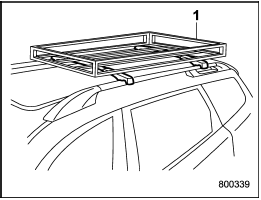
1) Roof rack
Luggage can be carried on the roof after securing the roof rack to the roof rail.
When installing the roof rack on the roof rail, follow the manufacturer’s instructions.
The roof rail is designed to carry loads (luggage and roof rack) of not more than 150 lbs (68 kg).

- When using the roof rack, make sure that the total carrying load of the roof rack and luggage does not exceed 150 lbs (68 kg). Overloading may cause damage to the vehicle.
- For cargo carrying purposes, the roof rail must be used together with the roof rack and any appropriate carrying attachment that may be needed. The roof rail must never be used alone to carry cargo. Otherwise, damage to the roof or paint or a dangerous road hazard due to loss of cargo could result.
NOTE
Remember that the vehicle’s center of
gravity is altered with the weight of the
load on the roof, thus affecting driving
characteristics.
Drive carefully. Avoid rapid starts, hard cornering and abrupt stops. Crosswind effects will be increased.
See also:
CHECK ENGINE warning light/Malfunction indicator lamp
CAUTION
If the CHECK ENGINE warning light/ malfunction indicator lamp illuminates while
you are driving, have your vehicle checked/repaired by your SUBARU dealer as soon
as possible. Continued ve ...
Rear gate – if the rear gate cannot be opened
In the event that you cannot open the rear
gate by operating the power door locking
switches or the remote keyless entry
system, you can open it from inside the
cargo area.
1. Remove the ac ...
Steps for Determining Correct Load Limit
1. Locate the statement “The combined
weight of occupants and
cargo should never exceed XXX
pounds” on your vehicle’s placard.
2. Determine the combined weight
of the driver and passengers th ...