


Catalytic converter
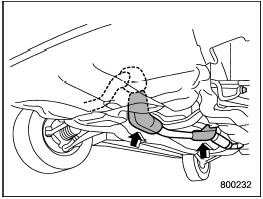
Turbo models
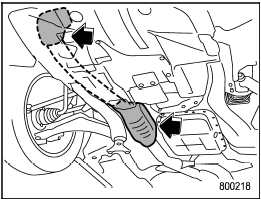
Non-turbo models
The catalytic converter is installed in the exhaust system. It serves as a catalyst to reduce HC, CO and NOx in exhaust gases, thus providing cleaner exhaust.
To avoid damage to the catalytic converter:
- Use only unleaded fuel. Even a small
amount of leaded fuel will damage the
catalytic converter.
- Never start the engine by pushing or pulling the vehicle.
- Avoid racing the engine.
- Never turn off the ignition switch while the vehicle is moving.
- Keep your engine tuned-up. If you feel the engine running rough (misfiring, backfiring or incomplete combustion), have your vehicle checked and repaired by an authorized SUBARU dealer.
- Do not apply undercoating or rust prevention treatment to the heat shield of catalytic converter and the exhaust system.
- Do not drive with an extremely low fuel level.

- Avoid fire hazards. Do not drive or park the vehicle anywhere near flammable materials (e.g., grass, paper, rags or leaves), because the catalytic converter operates at very high temperatures.
- Keep everyone and flammable materials away from the exhaust pipe while the engine is running.
The exhaust gas is very hot.
See also:
All season tires
The factory-installed tires on your new vehicle except 2.5 L turbo models are
all season tires.
All season tires are designed to provide an adequate measure of traction, handling
and braking perf ...
Electronic Brake Force Distribution (EBD) system warning
The brake system warning light also illuminates if a malfunction
occurs in the EBD system. In that event, it illuminates together with the ABS warning
light. The EBD system may be malfunctioning i ...
2010 Subaru Legacy review
The 2010 Subaru Legacy's redesign has been long overdue. Its sophisticated
new look is sleek, but as Mom always says it's what's on the inside that counts.
The sedan's redesign added nearly 4 inch ...